You are paying for leads you share with four other companies. Half of them never pick up. The other half want a price and nothing else. Meanwhile, the people who search "plumber near me" at 9 p.m. keep calling whoever shows up first on the map.
Local SEO lead generation fixes that. It puts your business in front of people already searching for your service in your town, and it makes calling you easy. This guide walks through a six-step path from search to phone call, and shows how to tell good leads from noise.
What local SEO lead generation actually means
It is not a rank. It is a chain: someone searches, finds you, trusts you and contacts you. Each link can break. Your job is to fix the weakest link first.
The pain: where leads leak
- You do not show up. No map spot, no calls.
- You show up but look risky. Few reviews, old photos, no replies.
- Your site loses them. Slow, confusing, no clear phone number.
- You cannot tell what works. Calls come in and nobody knows from where.
The six-step lead path
Step 1: Get found in the map results
Most home-service searches show the map first. Google picks results by relevance, distance and prominence. You cannot change distance, but you can improve relevance and prominence with a complete profile, the right categories and steady reviews. Our Google Maps SEO service works on exactly this.
Step 2: Look trustworthy at a glance
People scan photos, stars and recent reviews in seconds. Add real photos of your crew and jobs. Reply to every review. Keep your hours right.
Step 3: Give each service its own page
Someone searching "water heater repair" should land on a page about water heater repair in their town, not your home page. Add the service, the area, a short form and a phone number. See how we build these through local on-page SEO.
Step 4: Make calling easy
Put a tap-to-call number at the top of every page. Keep forms short: name, phone, what you need. Cut anything that slows a nervous customer down.
Step 5: Build review momentum
Ask right after each job. Send a direct link by text. Our review generation service handles this routine if you do not want to run it by hand.
Step 6: Track every lead
Use call tracking numbers and form tracking, so you know which calls came from Google. Then log what became a job. Without this, you are guessing.
Good leads vs. noise
| Good lead | Noise |
|---|---|
| In your service area | Outside your area |
| Asks for the service you sell | Wants a job you do not do |
| Calls from the map or a service page | Spam or sales calls |
| Gives details about the job | Wants only a price |
Track the percentage of calls that become booked jobs. That number matters more than call volume.
Local SEO vs. paid leads
Paid ads and lead services work fast, but you pay for every click or lead and the leads are often shared. Local SEO takes longer and builds an asset you own. Many owners use both: ads for now, SEO for later. Our Birmingham home repair case study reports 113 conversions in 30 days from Google Ads at $78.60 per conversion. That is a Google Ads result, not SEO.
What SEO-driven lead growth can look like
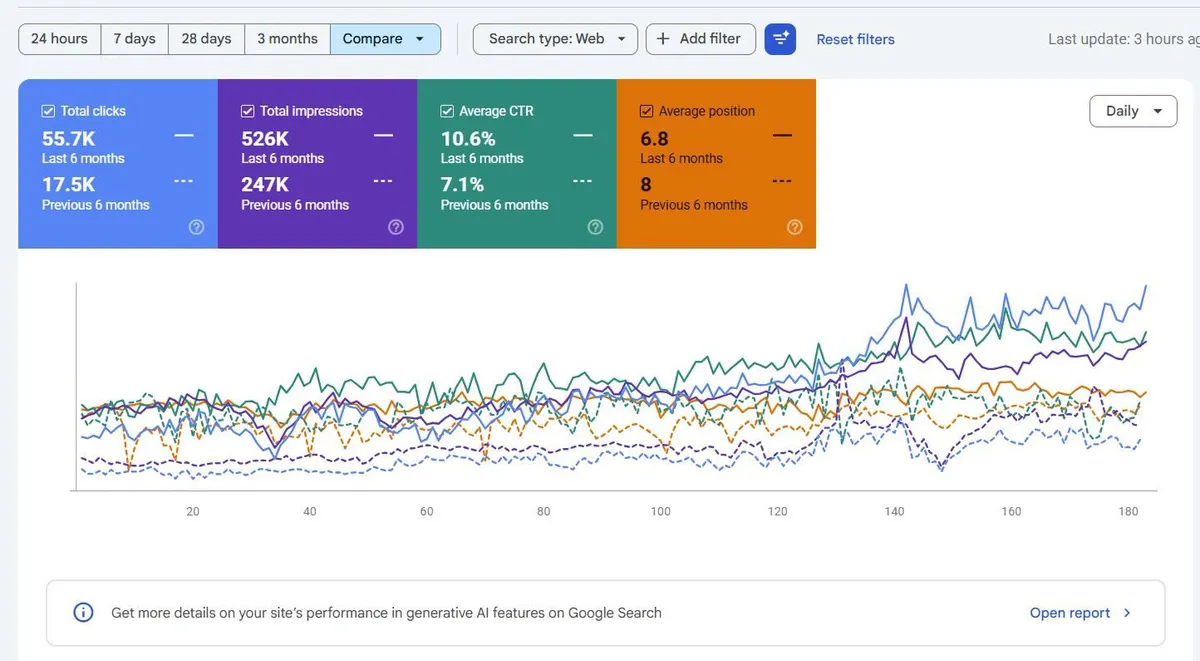
Our Dallas-Fort Worth remodeling case study reports 1.24K clicks, up 178% on the previous three months, and 3.8K organic users. Those are clicks and visits, not booked jobs. We report calls and form fills separately in the monthly report.
If you work in a big Texas market, see how we approach Houston, Dallas, Austin and San Antonio.